





 購物車 / 產生報價單



取消
商品圖片僅供參考,選購時請再留意商品規格
商品圖片僅供參考,選購時請再留意商品規格
商品圖片僅供參考,選購時請再留意商品規格
商品圖片僅供參考,選購時請再留意商品規格
商品圖片僅供參考,選購時請再留意商品規格
商品圖片僅供參考,選購時請再留意商品規格
商品圖片僅供參考,選購時請再留意商品規格
商品圖片僅供參考,選購時請再留意商品規格
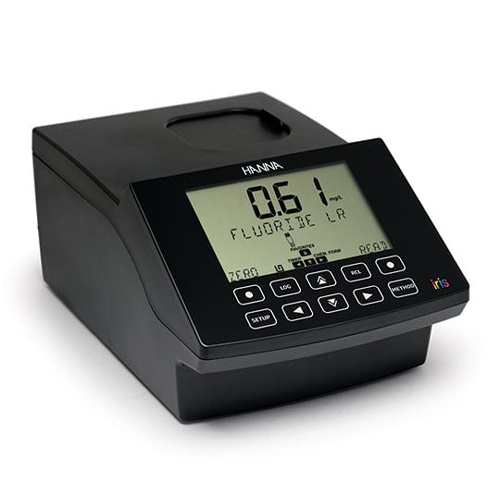
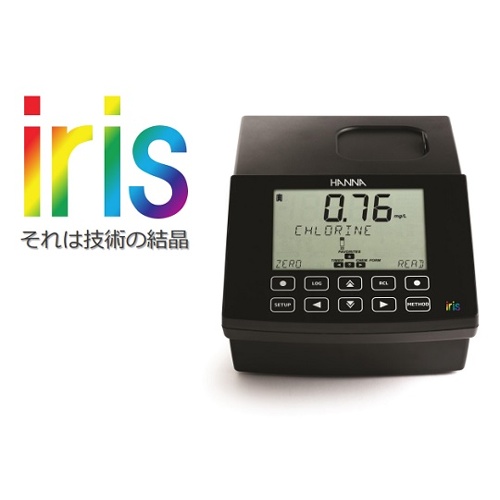
Hanna Instruments 分光光度計(分光束)鳶尾 HI801 HI801
Spectrophotometer (split beam) iris HI801
商品包含多種型號及規格,請點選「立即選購規格」挑選
💡 重要通知:
因中東戰爭造成原物料波動影響,若訂單成立後進貨成本發生重大異動,我們將主動聯繫您協商處理。造成不便,敬請見諒。

月結報帳 / 信用卡 / 銀行轉帳

宅配快速到貨,滿 NT$ 999 元即享免運!
選購型號
商品介紹
Feature
- A spectrophotometer with superior performance, ease of use and cost performance
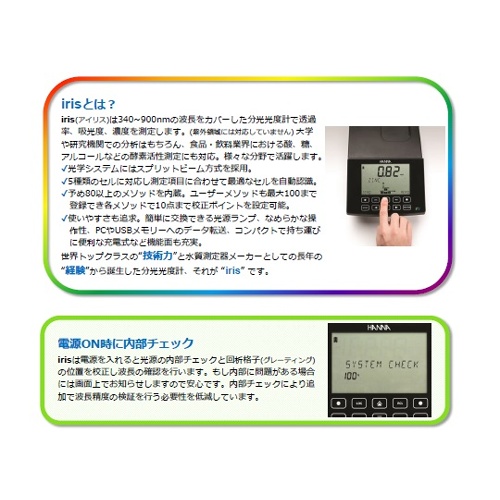
- Measuring transmittance, absorbance and concentration with a spectrophotometer covering a wavelength of 340~900 nm.
- It can measure the activity of enzymes such as acids, sugars and alcohols in the food and beverage industry as well as water quality and wastewater analysis at universities and research institutes.
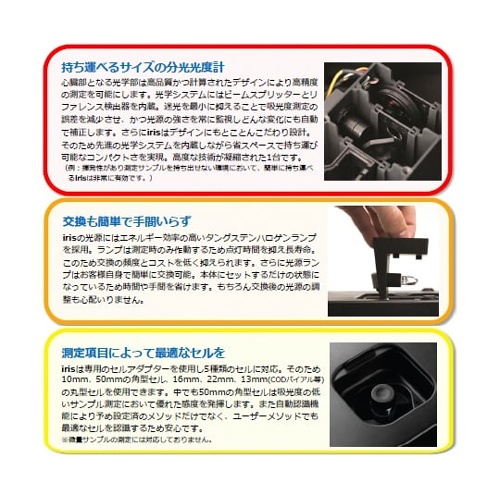
- Split beam system
- Supports five types of cells and automatically recognizes the most appropriate cell according to the measurement item.
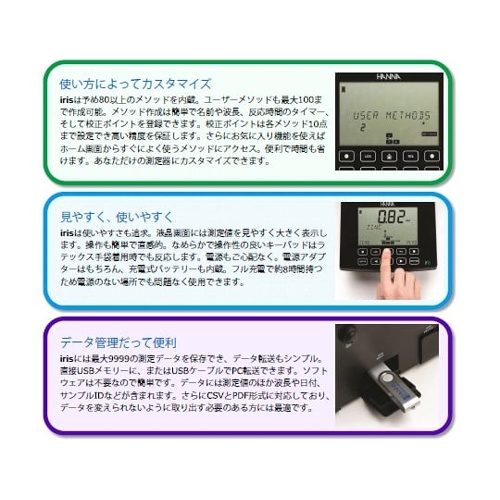
- More than 80 of the most popular methods are built in.
- Up to 100 user methods can be created.
- Data can be transferred to PC or USB memory via PDF files as well as CSV files.
Specifications
- Wavelength range: 340 to 900 nm (resolution: 1 nm)
- Wavelength accuracy: +/- 1.5 nm
- Absorbance Range: 0.000 - 3.000 Abs
- Absorbance Accuracy: 5 mAbs (0.000 - 0.500 Abs), 1% (0.500 - 3.000 Abs)
- Measuring modes: Transmittance (% T), Absorbance (abs), concentration in the following units (ppm, mg/L, ppt, degrees e, ppb, meq/L, microg/L, PCU, Pfund, pH, dKH, degrees dH, meq/kg) and no unit of measurement
- Wavelength selection: Automatic, based on selected methods (can be edited with user methods)
- Light source: tungsten halogen lamp
- Optical system: split beam system
- Wavelength calibration: internal, automatic calibration with visual feedback at startup
- Stray: Less than 0.1% T @ 340 nm (NaNO2)
- Spectral bandwidth: 5 nm
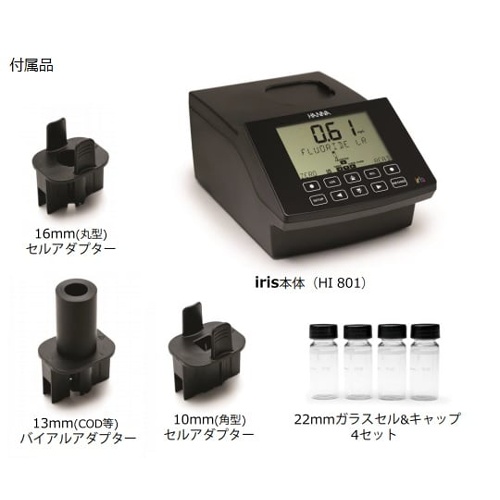
- Sample cells: Compatible with 5 types: 10 mm (square), 50 mm (square), 16 mm (round), 22 mm (round) and 13 mm (round)
- Number of methods: manufacturer settings/up to 150 items configurable (85 of which are installed), user settings/up to 100 items configurable
- Data storage: Up to 9999 data can be stored
- Data transfer: Connect to PC from the main unit using a USB memory or USB cable (Transfers in CSV and PDF files)
- Power supply: 15 VDC power adapter and internal lithium-ion rechargeable battery (about 8 hours or about 3000 measurements on a full charge)
- Operating environment 0: 50 degrees C Relative humidity: 95% or less (no condensation)
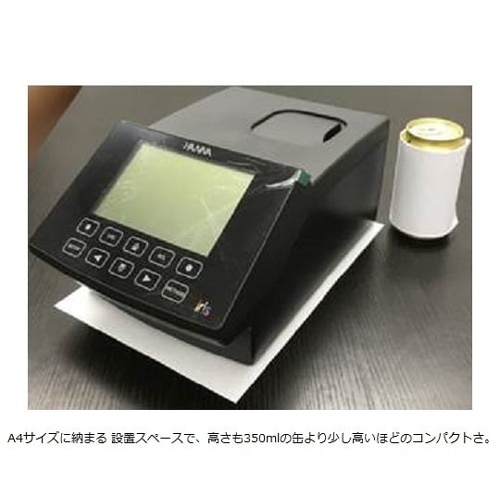
- Size: width 155 x height 205 x depth 322 mm
- Weight: 3.0 kg
Package size
- Package size:450×350×350 mm 4.5 kg
以上圖片及相關資訊由 AS ONE提供。
若有現場安裝、說明或特殊配送需求,歡迎事前與科研市集聯繫。部分商品因供應條件限制,可能無法提供相關服務,敬請見諒。